Viruses can ‘hitchhike’ on microplastics

microplastics

Microplastics are not just tiny particles that can be ingested, they can also carry viruses, a University of Queensland study has revealed. The study, led by Associate Prof Jianhua Guo and Dr Ji Lu from UQ’s Australian Centre for Water and Environmental Biotechnology (ACWEB), investigated if microplastics have the ability to harbour viruses, including the […]

Read More… from Viruses can ‘hitchhike’ on microplastics

Synthetic firefly’s glow lights new path to disease detection

Firefly's glow

A research team has found a way to synthetically create a firefly’s ‘glow’ that could have positive impacts on the access to medical light-imaging tools used to detect tumours and other diseases. Fireflies emit their ‘glow’ due to a natural chemical reaction that happens in their abdomens in the presence of an enzyme called luciferase. […]

Read More… from Synthetic firefly’s glow lights new path to disease detection

Ticks weaken skin’s immune response

ticks

Hitherto, scientists have not fully understood why ticks are such dangerous disease vectors. A research team led by Johanna Strobl and Georg Stary from MedUni Vienna’s Department of Dermatology shows that tick saliva inhibits the skin’s defence function, thereby increasing the risk of diseases such as tick-borne encephalitis (TBE) or Lyme disease. The study was […]

Read More… from Ticks weaken skin’s immune response

Nanoplastics can move up the food chain

food chain

Nanoplastics can move up the food chain from plants to insects and from insects to fish: A new study from the University of Eastern Finland shows that lettuce can take up nanoplastics from the soil and transfer them into the food chain. The concern about plastic pollution has become widespread after it was realised that mismanaged […]

Read More… from Nanoplastics can move up the food chain

Heat exhaustion in dogs

heat

On hot days, it is extremely important to know not only how to spot the signs of heat exhaustion in your dog, but also how to prevent it happening in the first place. Imagine sitting in the beautiful sunshine on a roasting hot summer day, wearing a thick fur coat. That’s what it’s like for […]

Read More… from Heat exhaustion in dogs

TBE virus decoded

TBE

TBE virus: activation mechanism of flaviviruses identified: A collaboration between researchers at the Center for Virology of the Medical University of Vienna and the Pasteur Institute in Paris has provided unexpected insights into the atomic interactions of the tick-borne encephalitis (TBE) virus in infected cells. In particular, the researchers identified a new molecular switch that […]

Read More… from TBE virus decoded

Spider venom drug start up success

The drug candidate, which was developed by a University of Queensland research team, uses a molecule found in the venom of the K’gari (Fraser Island) funnel web spider, and can potentially prevent damage caused by heart attacks and stroke. It will now be able to progress to clinical trials after UQ’s commercialisation company UniQuest licenced […]

Read More… from Spider venom drug start up success

Blood clotting venom research

Blood clotting venom research: Some of the world’s deadliest snakes could soon be saving lives, with research from The University of Queensland showing venom could be used to stop uncontrolled bleeding. The biomaterials research team from UQ’s Australian Institute for Bioengineering and Nanotechnology (AIBN), led by Postdoctoral Research Fellow Amanda Kijas, has found protein in […]

Read More… from Blood clotting venom research

Mosquito spit could hold key to vaccinations

zika

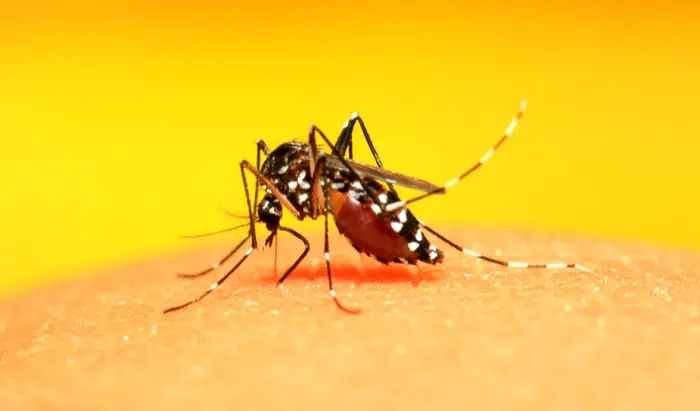
A molecule in mosquito spit has been identified as a potential new target for vaccination against a range of diseases for which there is no protection or medicine. University of Leeds Virus Host Interaction Team researchers have discovered that the molecule, called sialokinin, makes it easier for a number of viruses to pass from mosquitoes […]

Read More… from Mosquito spit could hold key to vaccinations

World blood donor day: Giving pets a new leash of life

donor

This World Blood Donor Day (14 June) the Royal Veterinary College (RVC) is celebrating the amazing cats and dogs which form part of its vital blood donor programme. These pets and their families help save and treat hundreds of pets every year by voluntarily donating their blood to be used in operations and procedures. To […]

Read More… from World blood donor day: Giving pets a new leash of life