Rare Disease Day research on inflammation

inflammation

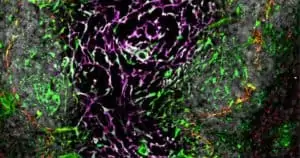
Cell research on rare disease finds new link to inflammation: The discovery of an inflammatory driver in a rare syndrome may have implications for more common diseases like Parkinson’s and viral infections. By Dr Sophia Davidson for Pursuit, WEHI (Walter and Eliza Hall Institute of Medical Research) and University of Melbourne. “How many people actually have […]

Read More… from Rare Disease Day research on inflammation

New test to screen newborns for rare genetic disorders

rare genetic

New test to screen newborns for rare genetic disorders paves the way for earlier diagnosis and treatment. A newly developed test to screen for three rare genetic disorders simultaneously in newborns was feasible, reliable and scalable, according to a new study. The research, led by the Murdoch Children’s Research Institute (MCRI), reported that screening for Prader […]

Read More… from New test to screen newborns for rare genetic disorders

Human embryos are switched on from the get go

human embryos

Scientists have discovered that genes in human embryos rapidly become active after fertilisation, opening a new window onto the start of human embryonic life. The finding that some genes are active from the get-go challenges the textbook view that genes don’t become active in human embryos until they are made up of four-to-eight cells, two […]

Read More… from Human embryos are switched on from the get go

New blood cancer gene defect can be treated with existing drugs

rare

New blood cancer gene defect can be treated with existing drugs: A defective gene, normally found in blood cancers, could be treated with drugs already available for cancers with similar gene defects, scientists at Queen’s University Belfast and the University of Birmingham have revealed. The research team, funded mainly by Cancer Research UK and the […]

Read More… from New blood cancer gene defect can be treated with existing drugs

Identifying children at risk of developing epilepsy

developing epilepsy

Seizure study first step towards revealing which children are at risk of developing epilepsy: Findings from an international genetic study involving the University of Melbourne means it may now be possible to predict which children are more likely to develop epilepsy later in life based on their genotype (the risk genes they may carry). The […]

Read More… from Identifying children at risk of developing epilepsy

World first discovery of spleen function could lead to better treatments for infectious diseases

World first discovery of spleen function could lead to better treatments for infectious diseases: Researchers at the Peter Doherty Institute for Infection and Immunity (Doherty Institute) have discovered a new gene that plays an important role in the way the spleen functions, potentially leading to new treatments for infectious diseases. The study, published in Science Immunology, also […]

Read More… from World first discovery of spleen function could lead to better treatments for infectious diseases

Genetics, brain structure and chronic pain

chronic pain

Genetic factors partly explain the link between brain structure and chronic pain, according to University of Queensland-led research. This research is a step towards understanding the complex relationship between the brain and human genome in how they influence and contribute to chronic pain — the leading cause of disability worldwide. Dr Scott Farrell from UQ’s […]

Read More… from Genetics, brain structure and chronic pain

Ensuring herb and spice authenticity

authenticity HerbMark

IGFS statement on the challenges ensuring herb and spice authenticity: The global herb and spice industry, valued at approximately US$4 billion, continues to grow year on year. This industry works extremely hard to ensure they provide consumers with safe and authentic products. However, it is continuously under threat from those less scrupulous operators seeking to […]

Read More… from Ensuring herb and spice authenticity

Glioblastoma and autism

Glioblastoma

Glioblastoma and Autism: In accordance with the blueprint contained in our DNA, human cells produce proteins that perform specific functions. An essential step in this process is the reading of the DNA and the transcription of the information into mRNA. A multi-centre study with significant participation from MedUni Vienna has now shown for the first […]

Read More… from Glioblastoma and autism

No evidence that conversion therapy works

conversion

Coventry University research finds no evidence that conversion therapy works and it may be damaging to people’s mental health Academics from Coventry University’s Faculty of Health and Life Sciences have found no robust evidence that conversion therapy can change a person’s sexual orientation or gender identity. They have, however, found evidence that it is associated […]

Read More… from No evidence that conversion therapy works