FMG course to better prepare health and social care professionals

FMG course

A new FMG course to help health and social care workers understand the many impacts of female genital mutilation (FGM) has been launched by FutureLearn in collaboration with the University of Aberdeen. The course was developed following a University of Aberdeen survey of UK medical schools that suggested graduating medical students felt under-prepared to deal […]

Read More… from FMG course to better prepare health and social care professionals

Ukraine tensions: The impact on surrogacy

ukraine

“UK couples are amongst a number of people that we are in touch with and helping at this uncertain time” Growing Families Founder Sam Everingham. Ukraine is one of the world’s leading destinations for heterosexual married couples seeking surrogacy arrangements. It is one of only six countries globally that accepts foreign nationals and recognises both […]

Read More… from Ukraine tensions: The impact on surrogacy

From student to war doctor teacher

Dr Rebekka Troller, Colorectal Robotic Fellow and Emergency and General Surgery Consultant at Medway Hospital NHS, is one of our talented trainers. Here Dr Troller shares her journey into humanitarian work and her transition from student to teacher. From student to teacher I first met David at St Mary’s Hospital in 2019. I was the […]

Read More… from From student to war doctor teacher

WHO recommends two new drugs to treat patients with COVID-19

new drugs

WHO recommends two new drugs to treat patients with COVID-19 : The drug baricitinib (a type of drug known as a Janus kinase (JAK) inhibitor, also used to treat rheumatoid arthritis) is strongly recommended for patients with severe or critical covid-19 in combination with corticosteroids, says a WHO Guideline Development Group of international experts in […]

Read More… from WHO recommends two new drugs to treat patients with COVID-19

14 new war doctors trained on STAE

14 doctors trained on our latest STAE course: This month, we were honoured to train 14 doctors from Afghanistan, Syria, Palestine and Ethiopia on our latest Surgical Training for Austere Environments (STAE) course. Over five days, the group participated in bespoke surgical workshops, specifically designed for treating traumatic – and often unique – injuries caused […]

Read More… from 14 new war doctors trained on STAE

WHO: 10 key global health moments from 2021

key

WHO: 10 key global health moments from 2021: It has been a year of colossal efforts in global health. Countries battled COVID-19, which claimed more lives in 2021 than in 2020, while struggling to keep other health services running. Health and care workers have borne the lion’s share of these efforts but often received little recognition or reward. Life-saving COVID-19 vaccines, […]

Read More… from WHO: 10 key global health moments from 2021

WHO’s Science in 5 on COVID-19: Omicron variant

omicron

What do we know about Omicron variant so far? WHO’s Dr Maria Van Kerkhove updates on the transmissibility, severity, symptoms and ways to protect yourself in Science in 5. […]

Read More… from WHO’s Science in 5 on COVID-19: Omicron variant

African kids medically disadvantaged due to COVID

African kids

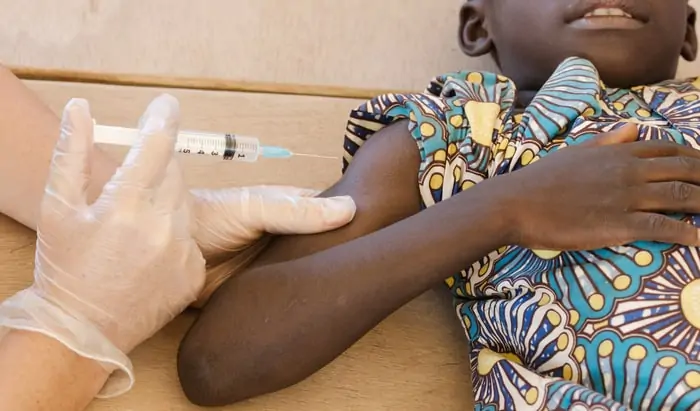
African kids among those to miss medical appointments due to COVID: Patients seeking treatment for HIV, malaria, tuberculosis, maternal and child health services missed vital appointments because of the pressures COVID-19 put on Africa’s health systems, new research has found. The research, published today in BMJ Global Health, found examples of up to half of South […]

Read More… from African kids medically disadvantaged due to COVID

Reducing HIV risk for women

The first long-acting option to protect women from HIV, proven to reduce women’s HIV risk, has been recommended for use by the World Health Organization (WHO). For nearly two decades, researchers from the School of Pharmacy at Queen’s University Belfast have been supporting development of a new drug-releasing vaginal ring to protect women from infection […]

Read More… from Reducing HIV risk for women

End Inequalities, End AIDS, End Pandemics

This World AIDS Day: End Inequalities, End AIDS, End Pandemics: “As if HIV itself were not enough, COVID-19 has brought more fear and insecurities to the communities. I felt the same things with the COVID-19 pandemic that I did when I heard I had the HIV virus—fear, anxiety, stress, and limitations. In the community, they say COVID-19 will be the end of the […]

Read More… from End Inequalities, End AIDS, End Pandemics