Eye scanner targets neurodegenerative diseases

eye

A multimodal eye scanner was developed as part of the MOON project. This scanner not only provides a high-resolution image of the structure using OCT but also sensitive molecular characterization of the tissue. To achieve this, the capabilities of OCT have been combined with those of Raman spectroscopy. The latter technology uses light to detect […]

Read More… from Eye scanner targets neurodegenerative diseases

Synthetic antibiotics could save millions of lives

synthetic

Liverpool scientists develop synthetic antibiotics that could save millions of lives: University of Liverpool scientists have taken a significant step towards unlocking the medical potential of a new class of potent antibiotic capable of killing ‘superbugs’ including MRSA without detectable resistance. The researchers have developed simplified synthetic versions of the molecule teixobactin, used by producer bacteria […]

Read More… from Synthetic antibiotics could save millions of lives

Project to monitor young patients at home

monitor

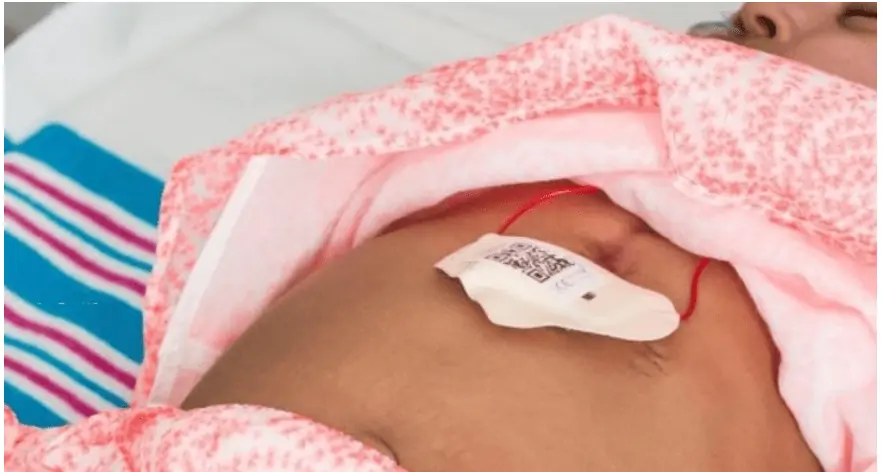
Ground-breaking project to monitor young patients at home wins funding from NHSX: The Alder Hey Children’s NHS Foundation Trust and Isansys Lifecare have won funding from NHS England’s Transformation Directorate (formally NHSX) to create a hospital from home for acutely unwell children. Alder Hey Children’s NHS Foundation Trust, Liverpool, UK, has successfully trialled the state-of-the-art […]

Read More… from Project to monitor young patients at home

University of Queensland partners with Moderna

Moderna

University of Queensland partners with Moderna: The University of Queensland has been selected as one of the first launch institutions in the world to partner with biotechnology company Moderna to research and develop vaccines to tackle the world’s greatest global public health threats.The partnership, brokered by two of the University’s leading researchers Professor Mark Walker and Professor Paul Young, […]

Read More… from University of Queensland partners with Moderna

Micro-protein helps yeast cells cope with nutrient scarcity

protein

Researchers from the University of Eastern Finland and the University of Montreal (Canada) have discovered that a micro-protein, which they named Nrs1, supports cell division and proliferation when nutrients are scarce. This result, published in PLOS Biology, sheds a new light on how evolution subtly reshapes the genomes of unicellular microorganisms, providing them with plasticity […]

Read More… from Micro-protein helps yeast cells cope with nutrient scarcity

A flash future of X-ray technology

X-ray technology

A flash future of X-ray technology could come from a digital camera: A Curtin University researcher will work with an international team to develop a new technology that will aim to take x-rays using a standard digital camera. The project, one of eight that successfully secured funding from the Hebrew University of Jerusalem (HUJI) – […]

Read More… from A flash future of X-ray technology

AI could worsen existing health inequities

AI

Data-driven technologies like artificial intelligence (AI) are powerful tools demonstrating potential in the diagnosis and treatment of diseases such as skin cancer. Yet these could inadvertently worsen the health inequalities experienced by minority ethnic groups if current challenges such as biased algorithms, poor data collection and a lack of diversity in research and development are […]

Read More… from AI could worsen existing health inequities

Coventry University wins prestigious award for game-based learning

game-based

Coventry University wins prestigious award for game-based learning: Exploring science through hopscotch and language through Jenga are just some of the inventive ideas that have earned a Coventry University game-based learning initiative a prestigious award. Led by Professor of Game Science Sylvester Arnab from the Centre for Postdigital Cultures (CPC), the initiative has won the Science of Learning award […]

Read More… from Coventry University wins prestigious award for game-based learning

Liver cancer after Hepatitis C: new tool developed

hepatitis

Hepatitis C can now be effectively treated, thanks to modern drugs. However, despite having been cured, some patients can go on to develop liver cancer. Currently, biannual ultrasound screening is done to monitor for incipient cancer. A research team at MedUni Vienna has now developed a new tool that can determine patients’ cancer risk in […]

Read More… from Liver cancer after Hepatitis C: new tool developed

A new photonic effect for accelerated drug discovery

Keeping up with the first law of robotics: A new photonic effect for accelerated drug discovery: Physicists at the University of Bath and University of Michigan demonstrate a new photonic effect in semiconducting nanohelices. A new photonic effect in semiconducting helical particles with nanoscale dimensions has been discovered by an international team of scientists led […]

Read More… from A new photonic effect for accelerated drug discovery