New UEA research shows impact of poverty on children’s brain activity

Children born into poverty show key differences in early brain function – according to new research from the University of East Anglia. Researchers studied the brain function of children aged between four months and four years in rural India. They found that children from lower-income backgrounds, where mothers also had a low level of education, […]

Read More… from New UEA research shows impact of poverty on children’s brain activity

Q&A with Professor Scott Byrne

Professor Scott Byrne, based at the University of Sydney in Australia, is one of a team of researchers around the world looking into how sunlight may affect human health in many ways which are not yet fully understood.  Here he answers some questions about how UV rays could affect the body’s immune system How do […]

Read More… from Q&A with Professor Scott Byrne

New drug alternative to statins

A new class of oral cholesterol-lowering drug could help patients unable to take statins due to side effects, according to a study published recently in the New England Journal of Medicine. The findings come from the largest study to date to test the effectiveness and safety of bempedoic acid, an oral medication – yet to […]

Read More… from New drug alternative to statins

AI can predict survival of ovarian cancer patients

Researchers have created new machine learning software that can forecast the survival rates and response to treatments of patients with ovarian cancer. The artificial intelligence software, created by researchers at Imperial College London and the University of Melbourne, has been able to predict the prognosis of patients with ovarian cancer more accurately than current methods. […]

Read More… from AI can predict survival of ovarian cancer patients

Blindfolded training could help doctors save young lives

Doctors’ leadership in pediatric resuscitation improved most when they wore a blindfold during simulation training In a simulation training study, pediatric team leaders who wore a blindfold improved their leadership skills ratings by 11% over the course of 3 resuscitation scenarios, versus 5% for non-blindfolded leaders. Published in Frontiers in Pediatrics, the findings demonstrate a […]

Read More… from Blindfolded training could help doctors save young lives

New blood tests to accurately diagnose TB

New blood tests for TB could accelerate diagnosis and save the NHS money, according to new research. Rapid blood tests used by the NHS are unable to rule out tuberculosis (TB) and should be replaced with a new, more accurate test, a study has found. In the largest study to date of rapid TB tests […]

Read More… from New blood tests to accurately diagnose TB

Wesleyan RSM trainee of the year finalist: Dr Kate Samuel

On Thursday 17 January five young doctors will compete for the coveted title of Wesleyan RSM trainee of the year. Meet the finalist | Dr Katie Samuel  RSM Orthopaedics Section   Presentation title:  National practice of midstream urine testing preoperatively for elective orthopaedics – Is it worth the resources? A career with a breadth of skills Anaesthesia is […]

Read More… from Wesleyan RSM trainee of the year finalist: Dr Kate Samuel

Urine is liquid gold when it comes to testing

Urine is arguably the most common diagnostic tool in routine medicine, with around 65m collected for tests every year. Given its importance in pinpointing infection and therefore targeted prescribing, a protocol for its collection would make sense, not least because untreated Urinary Tract Infection (UTI) is not only a significant driver of antimicrobial resistance (AMR) […]

Read More… from Urine is liquid gold when it comes to testing

Unravelling the mystery of bacterial persister cells

New research, from scientists at Imperial College London, unravels how so-called bacterial persister cells manipulate our immune cells, potentially opening new avenues to finding ways of clearing these bacterial cells from the body, and stopping recurrence of the bacterial infection. The latest findings, published in the journal Science, may help explain why some people suffer […]

Read More… from Unravelling the mystery of bacterial persister cells

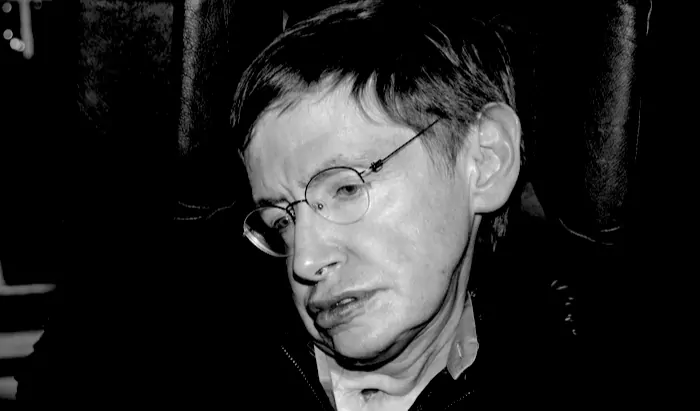
Remembering Stephen Hawking

When Stephen Hawking and I first met through our families’ common interest in autism, I respectfully addressed him as Professor Hawking. To be immediately (or as immediately as his then technology would allow) corrected: “Call me Stephen”. I soon learnt to be patient in awaiting his side of the conversation. It was always worthwhile. At […]

Read More… from Remembering Stephen Hawking