Taking the moisture out of moisturiser

moisture

Taking the moisture out of moisturiser: Researchers at the University of East Anglia have developed a new technology that turns beauty products like moisturiser into a dry piece of confetti-like ‘paper’. The breakthrough means that 98 per cent of the water in products like moisturiser, sun-cream, shampoo and conditioner can be removed. Users simply need to […]

Read More… from Taking the moisture out of moisturiser

How to diagnose and prevent Non-Alcoholic Fatty Liver Disease

Non-Alcoholic Fatty Liver Disease

NAFLD: How to Diagnose and Prevent Non-Alcoholic Fatty Liver Disease: Non-Alcoholic Fatty Liver Disease is a disease that affects the liver cells and causes a build-up of fats that could potentially lead to liver failure. Alcoholic Fatty Liver Disease is a different liver condition from NAFLD and is caused by excessive drinking of alcohol. NAFLD […]

Read More… from How to diagnose and prevent Non-Alcoholic Fatty Liver Disease

Smartphone app tracks heart conditions

tracks heart

Smartphone app tracks heart conditions: Healthcare researchers at the University of Wolverhampton are leading a new project to trial a newly developed app to benefit patients at New Cross Hospital. Professor James Cotton at the University’s Research Institute for Healthcare Science (RIHS), in collaboration with Dr Nazish Khan at University Hospitals Birmingham is investigating whether […]

Read More… from Smartphone app tracks heart conditions

Microbot development could help treat seizures

Microbot

Microbot development could help treat seizures: University of Glasgow researchers are part of a new project which is setting out to develop tiny injectable robots capable of predicting and mitigating epileptic seizures. The project, called CROSSBRAIN, is led by Tor Vergata University of Rome in Italy and is funded by the European Innovation Council. Over […]

Read More… from Microbot development could help treat seizures

New study refines precision of medical needles in surgical simulation

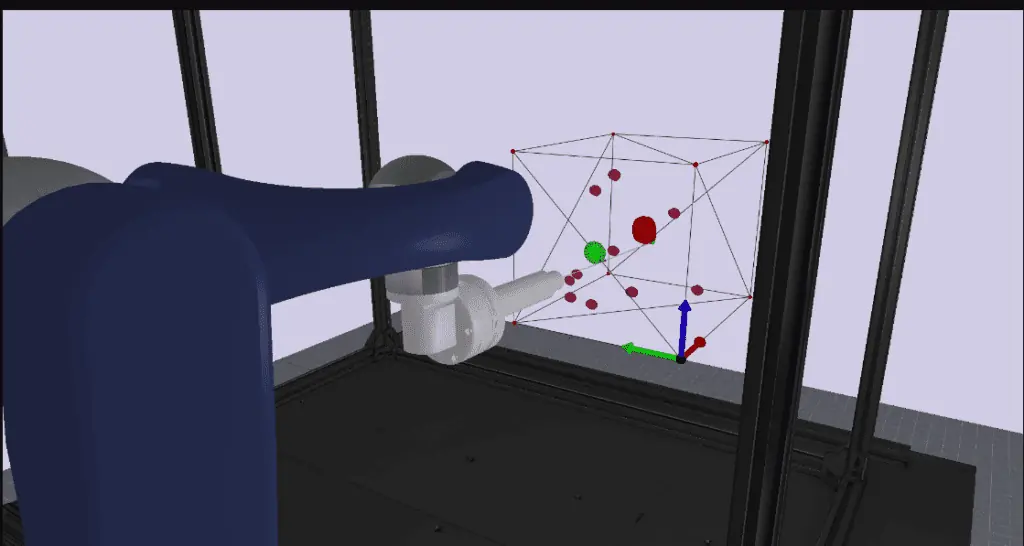
New study refines precision of medical needles in surgical simulation: Researchers at the University of Bristol have discovered a way of improving the accuracy of medical needle-use in surgical simulation. Their breakthrough, the details of which have been published in Mathematical and Computer Modelling of Dynamical Systems, will improve training for junior surgeons by reproducing […]

Read More… from New study refines precision of medical needles in surgical simulation

Farming more seaweed for food, feed and fuel

seaweed

Expanding global seaweed farming could go a long way to addressing the planet’s food security, biodiversity loss and climate change challenges according to a University of Queensland-led study. PhD Candidate Scott Spillias, from UQ’s School of Earth and Environmental Science, said seaweed offered a sustainable alternative to land-based agricultural expansion to meet the world’s growing […]

Read More… from Farming more seaweed for food, feed and fuel

Zooplankton inspire marine robots

Sea creatures inspire marine robots which can operate in extra-terrestrial oceans: Scientists at the University of Bristol have drawn on the design and life of a mysterious zooplankton to develop underwater robots. These robotic units called RoboSalps, after their animal namesakes, have been engineered to operate in unknown and extreme environments such as extra-terrestrial oceans. […]

Read More… from Zooplankton inspire marine robots

Wearable technology & AI to change clinical trial monitoring

technology

A multi-disciplinary team of researchers has developed a way to monitor the progression of movement disorders using motion capture technology and AI. In two ground-breaking studies, published in Nature Medicine, a cross-disciplinary team of AI and clinical researchers have shown that by combining human movement data gathered from wearable tech with a powerful new medical […]

Read More… from Wearable technology & AI to change clinical trial monitoring

COPD patients home earlier with 02 monitor

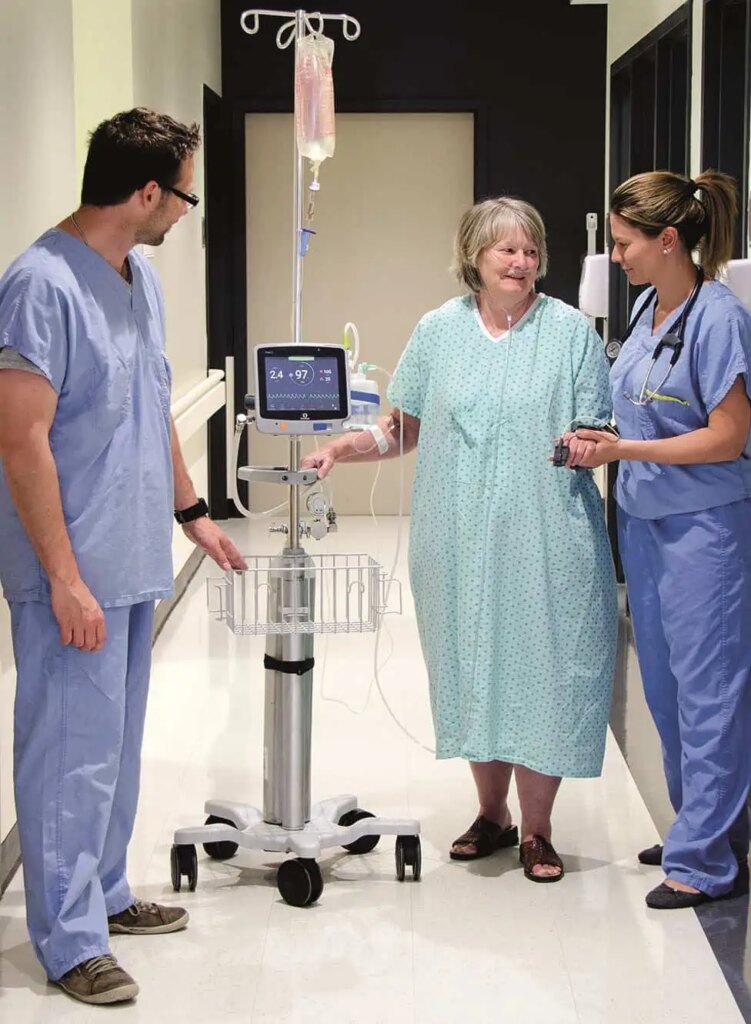
Improved care, lower cost – COPD patients spent 30% less time in hospital with automated O2 monitor from Vygon With the latest British Lung Foundation report on chronic obstructive pulmonary disorder (COPD) highlighting ‘a worrying picture of substandard care’ for patients in the UK, Vygon is urging clinicians to consider automated oxygen therapy to help […]

Read More… from COPD patients home earlier with 02 monitor

Poor glycemic control predictions from AI

glycemic

Poor glycemic control in patients with type 2 diabetes can be predicted from patient information systems with the help of machine learning. The risk for poor glycemic control in patients with type 2 diabetes can be predicted with confidence by using machine learning methods, a new study from Finland finds. The most important factors predicting […]

Read More… from Poor glycemic control predictions from AI