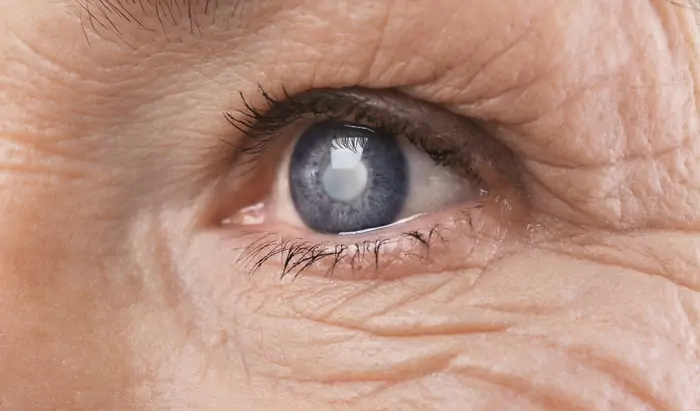
Alzheimer’s and cataract surgery

Alzheimer's and cataract surgery

Alzheimer’s and cataract surgery: People with newly diagnosed Alzheimer’s disease are less likely to have cataract surgery than people without Alzheimer’s disease. People with Alzheimer’s disease (AD) are less likely to have cataract surgery than people without Alzheimer’s disease. The procedure rate starts to decrease already one year after the diagnosis, according to a new study […]

Read More… from Alzheimer’s and cataract surgery

Febrile Convulsions and Seizures

Febrile convulsions are incredibly common in babies and small children. Fits or seizures are triggered by a rise in their core body temperature when they are unwell and feverish. As many as one in 20 children may experience a febrile convulsion by the time they are 5 years old. Febrile convulsions occur most frequently in […]

Read More… from Febrile Convulsions and Seizures

Seizures, convulsions and epilepsy

epilepsy

A seizure is the medical term for a fit or convulsion. One in twenty people will have a seizure at some point in their lives. However, not everyone who has a seizure will have epilepsy. Electrical activity happens constantly in our brains and controls movements and bodily functions. If there is a disruption to the […]

Read More… from Seizures, convulsions and epilepsy

Could ‘Brain-Computer Interface’ cure chronic pain?

chronic

Researchers at the University of East Anglia are launching a new project to see whether virtual reality could help with the treatment of chronic pain. As many as 50 per cent of the UK population are living with chronic pain, and the team will study whether new technology delivered via a VR headset could help […]

Read More… from Could ‘Brain-Computer Interface’ cure chronic pain?

Neuroprotection in the early stages of Alzheimer’s

neuroprotection

A protein modification of the gene expression regulator MECP2 can convey neuroprotection under inflammation. Researchers at the University of Eastern Finland have found a potential neuroprotective effect of a protein modification that could be a therapeutic target in early Alzheimer’s disease. The new study investigated the role of MECP2, a regulator of gene expression, in […]

Read More… from Neuroprotection in the early stages of Alzheimer’s

Clinicians mental health and wellbeing during COVID-19

Clinicians mental health

Episode 1: Improving clinicians mental health and wellbeing during COVID-19, what can we do? The first episode of the Mental health, wellbeing and primary care; current concerns and contemporary responses three-part webinar series will see Professor Neil Greenberg, Professor of Defence Mental Health, King’s College London, UK, and Dr Paquita de Zulueta, Honorary Senior Clinical Lecturer, Imperial College London, UK, discuss cutting edge […]

Read More… from Clinicians mental health and wellbeing during COVID-19

Non-invasive brain cancer treatment targeting glioblastoma

non-invasive brain tumour treatment

A non-invasive Brain Cancer Treatment has been announced by Ivy Brain Tumor Center, SonALAsense and Insightec: The First Patient Dosed in First-in-Human Clinical Trial of Non-invasive Sonodynamic Therapy for the Treatment of Brain Cancer.  The study combines metabolic targeting of glioblastoma with inert drug activated using MRI-guided focused ultrasound. The Ivy Brain Tumor Center at […]

Read More… from Non-invasive brain cancer treatment targeting glioblastoma

WHO: Long working hours increasing deaths

Long working hours

Long working hours increasing deaths from heart disease and stroke: WHO, ILO: Long working hours led to 745 000 deaths from stroke and ischemic heart disease in 2016, a 29 per cent increase since 2000, according to the latest estimates by the World Health Organization and the International Labour Organization published in Environment International. In a […]

Read More… from WHO: Long working hours increasing deaths

Why bipolar patients don’t take their meds

bipolar

People with bipolar disorder may not take their medication because of side effects, fear of addiction and a preference for alternative treatment – according to research from Norfolk and Suffolk NHS Foundation Trust (NSFT) and the University of East Anglia (UEA). Nearly half of people with bipolar disorder do not take their medication as prescribed […]

Read More… from Why bipolar patients don’t take their meds