World’s first high-resolution brain developed by 3D printer

brain

In a joint project between MedUni Vienna and TU Wien, the world’s first 3D-printed “brain phantom” has been developed, which is modelled on the structure of brain fibres and can be imaged using a special variant of magnetic resonance imaging (dMRI). As a scientific team led by MedUni Vienna and TU Wien has now shown […]

Read More… from World’s first high-resolution brain developed by 3D printer

The tech that detects rapid pressure changes inside your heart

rapid pressure changes

The technology that can detect rapid pressure changes inside your heart: Researchers at the University of East Anglia have used cutting-edge imaging technology to measure acute pressure changes inside the heart. The state-of-the-art technology uses magnetic resonance imaging (MRI) to create detailed images of the heart. Using the new technology, the team discovered that pressure […]

Read More… from The tech that detects rapid pressure changes inside your heart

GOSH: new epilepsy research reveals brain wiring differences

New epilepsy research reveals brain wiring differences: Children with epilepsy have brains that are wired differently from those without the condition, a new study by our researchers has found. This new epilepsy research paves the way for improved treatment, specifically how different surgery techniques can treat children and young people with epilepsy. A collaborative project, […]

Read More… from GOSH: new epilepsy research reveals brain wiring differences

Heart attack prediction using AI is on the horizon

AI

Heart attack prediction using AI is on the horizon: Revolutionary technology designed to accurately predict heart attacks will be showcased on Tuesday at Melbourne’s premier science event, the Bionics Institute 2022 Graeme Clark Oration. Developed by international researcher Professor Natalia Trayanova (Johns Hopkins University, USA), the artificial intelligence and bioengineering tool could prove to be […]

Read More… from Heart attack prediction using AI is on the horizon

Single brain scan can diagnose Alzheimer’s disease

Alzheimer’s

A single MRI scan of the brain could be enough to diagnose Alzheimer’s disease, according to new research by Imperial College London. The research uses machine learning technology to look at structural features within the brain, including in regions not previously associated with Alzheimer’s. The advantage of the technique is its simplicity and the fact […]

Read More… from Single brain scan can diagnose Alzheimer’s disease

Multiple Sclerosis: New MRI technique could improve diagnosis and treatment

sclerosis

It is important that multiple sclerosis (MS) is diagnosed and treated as early as possible in order to delay progression of the disease. The technique of magnetic resonance imaging (MRI) plays a key role in this process. In the search for ever better methods, a new MRI technique has been used at MedUni Vienna as […]

Read More… from Multiple Sclerosis: New MRI technique could improve diagnosis and treatment

New research gives hope for sight recovery in stroke survivors

New research gives hope for sight recovery in stroke survivors: Researchers have used MRI imaging to map visual brain activity in stroke survivors with sight loss that gives new hope for rehabilitation and recovery. Scientists from the University of Nottingham have revealed new insights by combining data from clinical sight tests with brain imaging to […]

Read More… from New research gives hope for sight recovery in stroke survivors

Breast cancer screening recalls

breast

Breast cancer is the commonest fatal cancer in women. Early detection increases a woman’s chances of recovery. Magnetic Resonance Imaging (MRI) is an accurate technique for detecting and classifying tumours in breast tissue. However, it sometimes causes “false alarms”, thus requiring further investigation (biopsy) and in some cases even resulting in so-called overtreatment, that is […]

Read More… from Breast cancer screening recalls

Anticipation of the future reward shapes self-controlled choice

frontotemporal

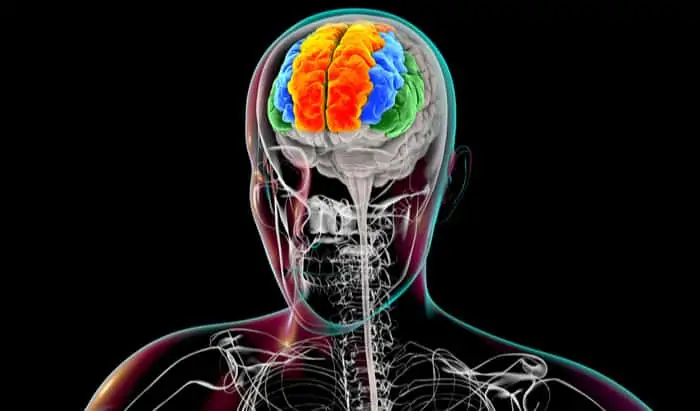
Anticipation of the future reward shapes self-controlled choice: Research published in the Journal of Neuroscience shows the prefrontal cortex of the human brain is associated with anticipation of favourable future events and shapes how individuals make a choice, advancing our understanding of self-control in decision making. Using MRI functional scanning to observe participants awaiting an unexperienced […]

Read More… from Anticipation of the future reward shapes self-controlled choice

Rocket game can help control schizophrenia

For the first time, new research shows people with schizophrenia can train themselves to control brain regions linked to verbal hallucinations, using an MRI scanner and a computerised rocket game. The pilot study by researchers at King’s College London’s Institute of Psychiatry, Psychology & Neuroscience (IoPPN) and the University of Roehampton suggests the new technique […]

Read More… from Rocket game can help control schizophrenia