Higher levels of CO2 increase survival of viruses in the air and transmission risk

CO2

A new study has revealed for the first time the vital role carbon dioxide (CO2) plays in determining the lifespan of airborne viruses – namely SARS-CoV-2, the virus that causes COVID-19. It clearly showed keeping CO2 levels in check helps to reduce virus survival, and therefore the risk of infection. The research, led by the […]

Read More… from Higher levels of CO2 increase survival of viruses in the air and transmission risk

Being overweight hampers immune response to SARS-CoV-2

immune response to SARS-CoV-2

Being overweight hampers immune response to SARS-CoV-2: University of Queensland-led research shows being overweight can impair the body’s antibody response to SARS-CoV-2 infection but not to the protection offered by vaccination. Research lead, School of Chemistry and Molecular Biosciences PhD candidate Marcus Tong, said the findings build on the team’s existing research on how COVID-19 […]

Read More… from Being overweight hampers immune response to SARS-CoV-2

COVID-19 can cause brain cells to ‘fuse’

brain

Researchers at The University of Queensland have discovered viruses such as SARS-CoV-2 can cause brain cells to fuse, initiating malfunctions that lead to chronic neurological symptoms. Professor Massimo Hilliard and Dr Ramon Martinez-Marmol from the Queensland Brain Institute have explored how viruses alter the function of the nervous system. SARS-CoV-2, the virus that causes COVID-19, […]

Read More… from COVID-19 can cause brain cells to ‘fuse’

Cats & Covid

covid

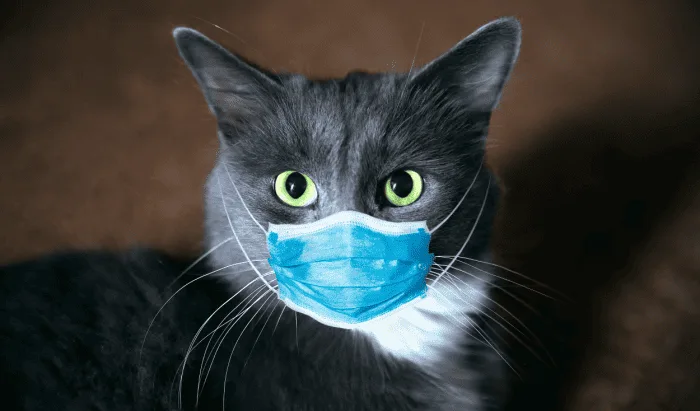
Household cats acquired the same COVID-19 variants as their owners throughout the pandemic, according to new research. The study, published in Emerging Infectious Diseases and led by the MRC-University of Glasgow Centre for Virus Research (CVR) – where scientists first detected human-to-cat COVID-19 transmission in April 2021 – found a retrospective association between the dominant […]

Read More… from Cats & Covid

Further illnesses still expected from SARS-CoV-2

SARS-CoV-2

SARS-CoV-2: Only neutralising antibodies allow conclusions to be drawn about protection against new infections: Mutations of virus and illnesses caused by new variants are still to be expected even in a SARS-CoV-2 situation that has now become endemic. Although the population has developed specific immune responses due to previous infections and vaccinations, vaccinated and vulnerable individuals […]

Read More… from Further illnesses still expected from SARS-CoV-2

Finger-prick blood test identifies immunity to COVID-19

finger-prick

A finger-prick blood test can identify people most at risk of being reinfected with COVID-19. The simple test, developed by a small biotech firm based in Cardiff (ImmunoServ Ltd) in close collaboration with Cardiff University researchers, measures the presence of immune T cells that can recognise SARS-CoV-2. Over 300 volunteers were recruited from across the UK […]

Read More… from Finger-prick blood test identifies immunity to COVID-19

SARS-CoV-2 variants able to enter cells of wider range of species than original virus

SARS

In a paper published in The Journal of General Virology , researchers at The Pirbright Institute have confirmed that SARS-CoV-2 variants are able to gain entry to cells of more species than the original virus. The original SARS-CoV-2 wildtype virus, which emerged in China in 2019, is understood to have come from bats, but since […]

Read More… from SARS-CoV-2 variants able to enter cells of wider range of species than original virus

T cells from common colds cross-protect against infection with SARS-CoV-2

T cells

People with higher levels of T cells from common cold coronaviruses are less likely to become infected with  SARS-CoV-2. A new study, published in Nature Communications and led by Imperial College London researchers, provides the first evidence of a protective role for these T cells. While previous studies have shown that T cells induced by […]

Read More… from T cells from common colds cross-protect against infection with SARS-CoV-2

T cells a key defence against Omicron

T cells a key defence against Omicron: Research from the University of Melbourne and Hong Kong University of Science and Technology (HKUST) has revealed T cells, one of the body’s key defences against COVID-19, are expected to be effective in mounting an immune response against Omicron despite its significantly higher mutations compared to previous variants of concern. T cells, generated both by […]

Read More… from T cells a key defence against Omicron

TrioMed Active technology deactivates 99.9%+ of COVID-19 in 5 minutes

triomed

 i3 BioMedical Inc. achieves the fastest and most efficient “killing speed” of SARS-CoV-2. TrioMed sets the unequalled standard of superiority in Active protection worldwide. The Virucidal technology developed by i3 BioMedical Inc. was confirmed to deactivate more than 99.9% of SARS-CoV-2 – the virus that causes COVID-19 – on the outer surface of the TrioMed […]

Read More… from TrioMed Active technology deactivates 99.9%+ of COVID-19 in 5 minutes